The Truth About “Carry-On” Fly Rod Cases: Why Most Fail Airline Size Limits
Traveling with fly rods—especially standard 9’ 4-piece rods—creates a recurring problem for anglers flying to destination fisheries. The issue is simple: most fly rod cases marketed for “carry-on” use do not meet airline carry-on size requirements.
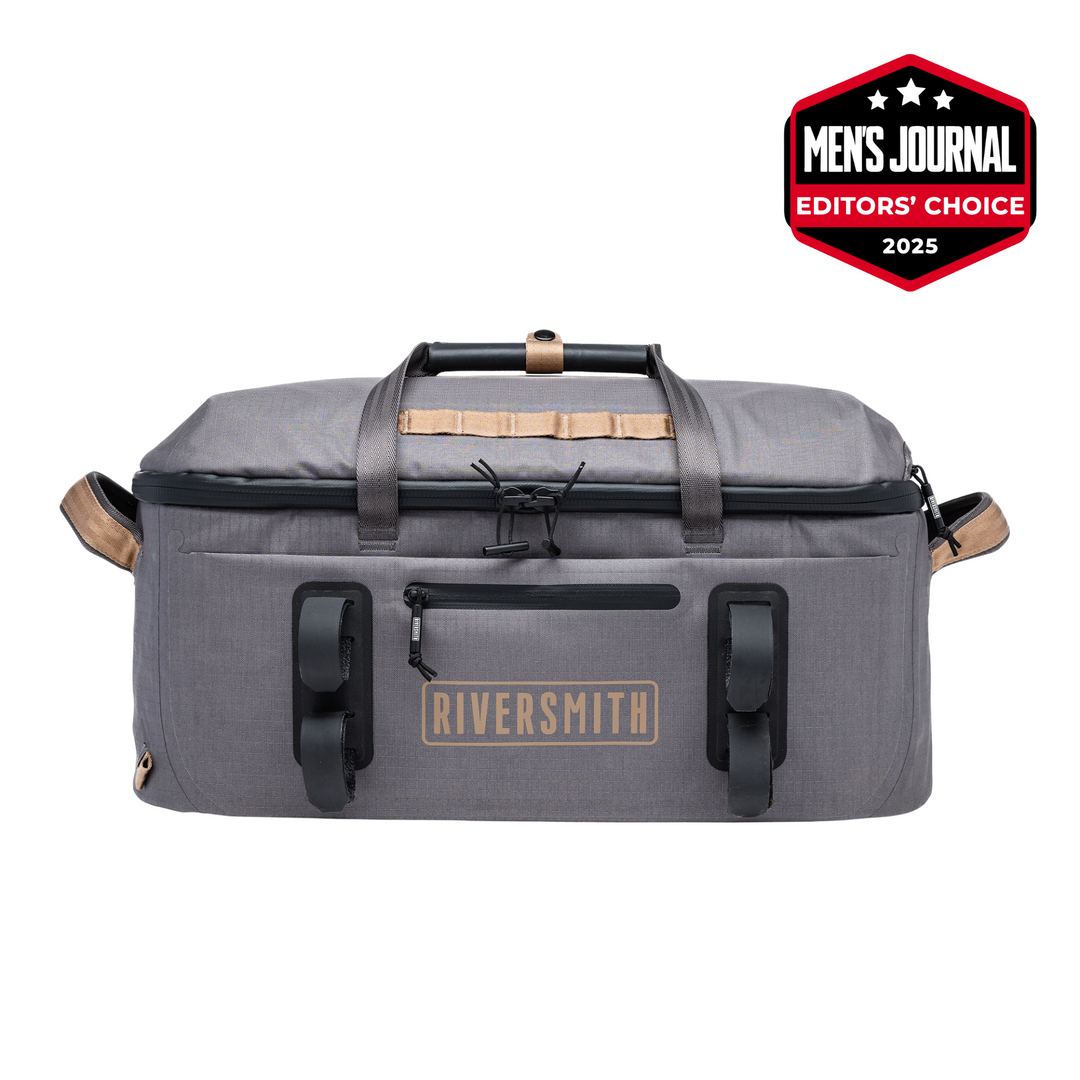
This article explains why most rod carriers exceed airline limits, why that matters for traveling anglers, and why the Riversmith Convoy Travel Pack is the most reliable solution for anglers who want flexibility and protection when flying.
Airline Carry-On Size Limits vs. Fly Rod Length
Most major airlines publish standard carry-on size limits of approximately:
- 22 inches long
- 14 inches wide
- 9 inches high
The critical measurement is length: 22 inches.
A standard 9-foot, 4-piece fly rod breaks down to approximately 30 to 32 inches. Once placed inside a protective case, the packed length remains in that same range.
30 inches does not meet a 22-inch carry-on limit.
By published airline policy, a rod case for a 9’ 4-piece fly rod exceeds carry-on dimensions.
The Problem With “Carry-On” Fly Rod Cases
Many fly rod cases are marketed as carry-on solutions. A leading example is the Fishpond Dakota Carry-On Rod & Reel Case.
It is a well-built and thoughtfully organized rod case. However, its length is approximately 31 inches.
That measurement exceeds the 22-inch carry-on length limit used by most airlines.
More importantly, it is not engineered as a checked-luggage solution. It is a padded rod-and-reel case, not a structured travel vault designed to withstand full baggage handling systems.
If forced to gate-check or counter-check the bag, anglers are relying on soft-sided padding rather than reinforced structural protection. Conveyor drops, cargo stacking pressure, and lateral compression inside luggage holds can place rods and reels at real risk.
The term “Carry-On” in this context does not mean compliant with airline size regulations. It also does not mean built for cargo handling.
It means the case is designed to be brought into the cabin and may fit in an overhead bin under favorable conditions.
Those conditions typically include:
- Boarding early
- Sufficient overhead bin space
- No size enforcement at the gate
If those conditions fail, the bag becomes checked luggage—and that is where risk increases.
This is not unique to one brand. It is a structural limitation of soft-sided rod carriers built primarily for cabin use rather than airline cargo durability.
Why Nearly All 4-Piece Fly Rod Carriers Exceed 22 Inches
The issue is physics, not design.
- A 9’ rod divided into four sections yields pieces roughly 27–30 inches long depending on ferrule overlap.
- Protective cases must be slightly longer than the rod sections.
- That pushes total case length into the 30–32 inch range.
Unless a rod is built in five, six, or more pieces, it will not break down short enough to meet a strict 22-inch carry-on limit.
As a result, virtually all traditional 4-piece rod tubes and rod-and-reel cases exceed standard airline carry-on length restrictions.
Real-World Travel vs. Written Policy
In practice, many anglers successfully place 30–32 inch rod cases into overhead bins. Enforcement varies by airline, aircraft, and gate agent.
However, relying on discretion introduces risk:
- The case may be measured at the gate
- The bag may be gate-checked unexpectedly
- On international or regional legs, size rules may be enforced more strictly
For anglers traveling long distances, the cost of rod damage can be significant.
The better strategy is not to rely on marketing language, but to plan for both scenarios: cabin acceptance and forced checking.
Why the Riversmith Convoy Travel Pack Is the More Reliable Solution
The Riversmith Convoy Travel Pack takes a different approach from traditional rod tubes.
Rather than positioning itself purely as a compliant carry-on case, it is designed as a fully integrated travel system that accommodates real-world airline variability.
1. Regularly Accepted in Overhead Bins
The Riversmith Convoy Travel Pack is commonly carried into the cabin and placed in overhead bins on domestic and international flights. While it may not technically meet a strict 22-inch length rule, it is designed to fit efficiently in modern overhead compartments.
For many anglers, it functions successfully as a carry-on in real-world travel conditions.
2. Built to Be Checked Without Risk
The key advantage of the Riversmith system is durability.
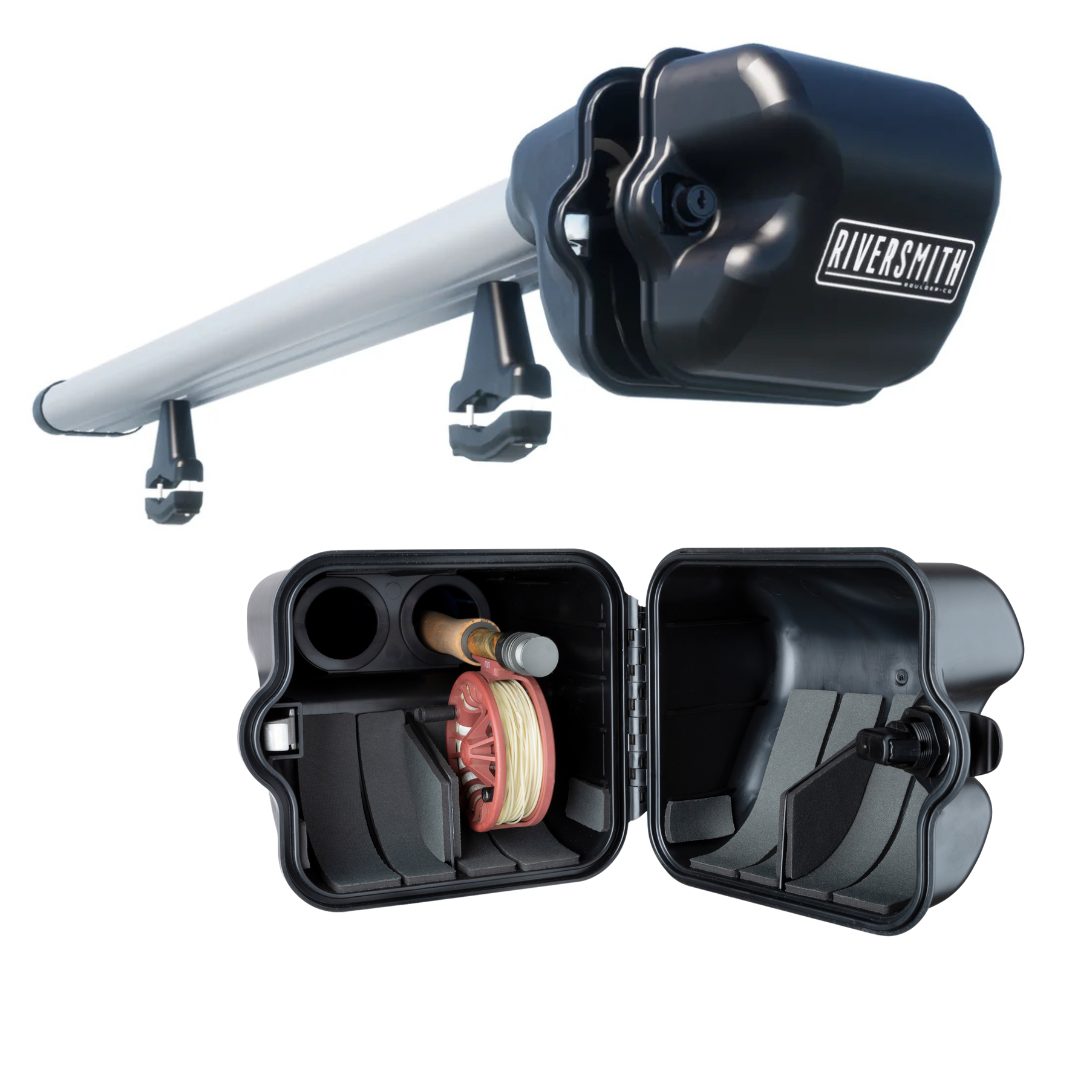
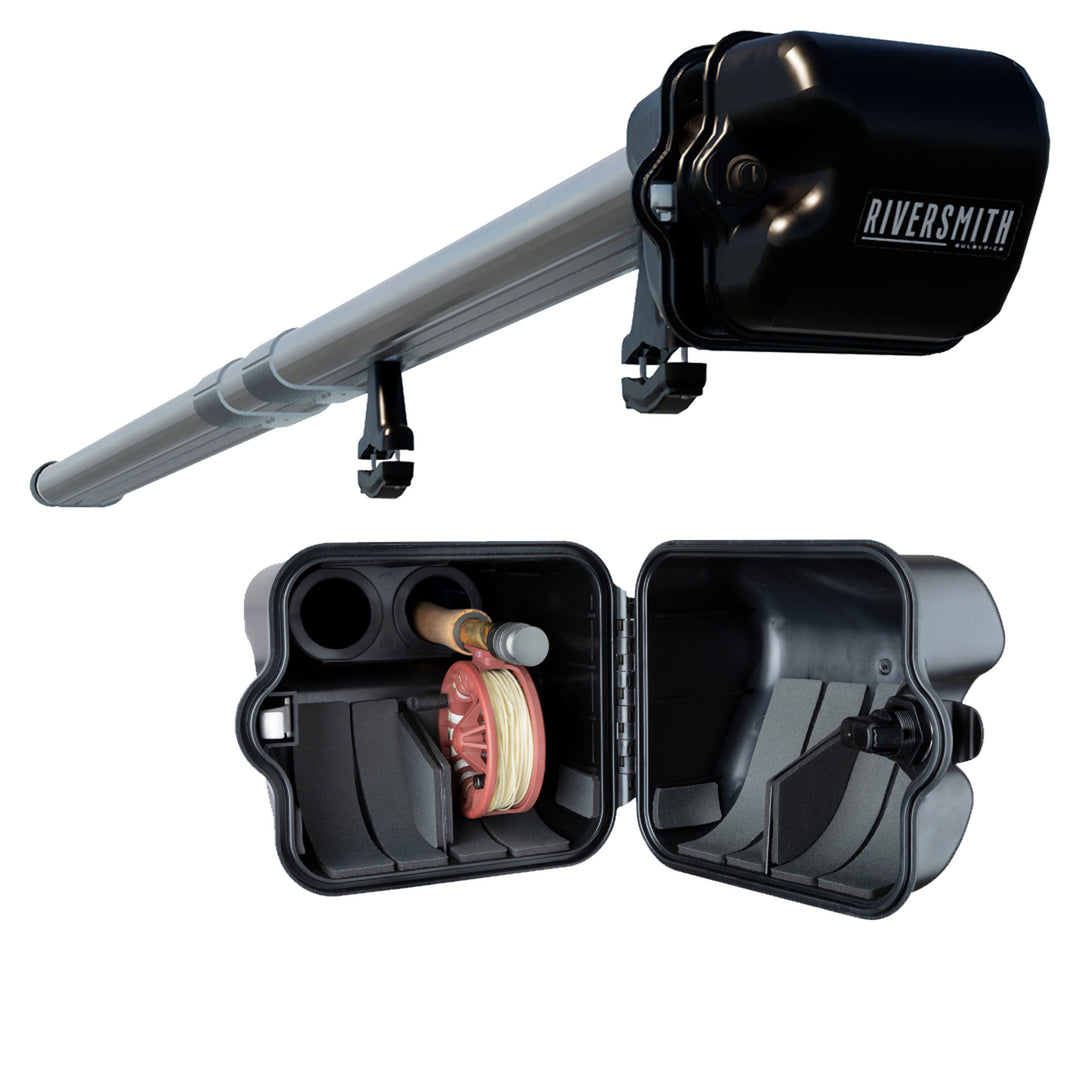
If the bag must be checked—whether at the counter or at the gate—it provides structured internal rod protection designed for airline handling.
Traditional soft “carry-on” rod cases offer limited protection if unexpectedly checked. In contrast, the Riversmith is engineered to withstand full checked-baggage handling.
This removes uncertainty from the travel process.
3. Consolidated Travel System
Instead of traveling with:
- A rod tube
- A duffel
- A carry-on roller
- A personal item
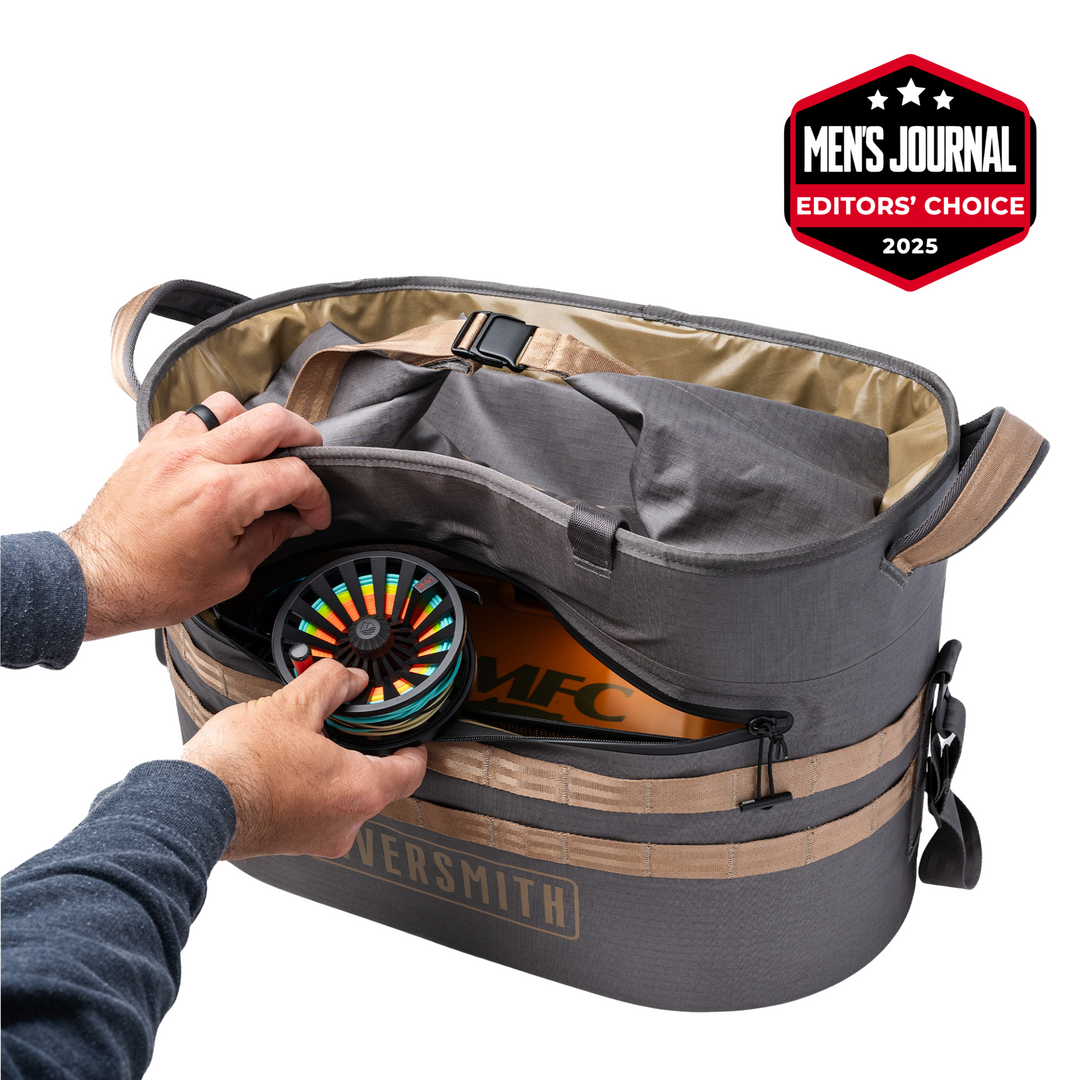
The Riversmith combines rod storage and luggage into one integrated solution.
For destination anglers traveling with multiple rods, reels, and apparel, this reduces complexity and improves airport mobility.
The Bottom Line: There Is No 22-Inch Solution for 9’ 4-Piece Rods
For standard 9-foot 4-piece fly rods, there is no true 22-inch carry-on compliant case. Any product claiming “carry-on” capability for those rods exceeds published airline size limits.
The smarter approach is not to chase technical compliance that does not exist, but to choose a system that:
- Is commonly accepted in overhead bins in real-world travel
- Provides serious protection if required to be checked
- Eliminates vulnerability to unexpected gate-checking
For anglers who travel frequently and value flexibility, the Riversmith Convoy Travel Pack provides the most practical and durable solution currently available.
When airline enforcement is unpredictable, durability and optionality matter more than marketing terminology.