Breaking Down The Realities of Collapsible Fly Rod Roof Racks
When you invest in premium fly fishing gear, you aren't just buying tools for the water. You're investing in the stories, the miles, and the memories those rods will earn. Protecting that investment on the highway matters.
In the outdoor gear world, a novel design trend has surfaced: the collapsible, telescoping roof rack. The pitch is seductive. Collapse the carrier when it's empty, or pull it off the vehicle and carry it like luggage.
But when you look past the novelty and examine the physics of gear transport, a straightforward question emerges: Should a product designed to protect fragile graphite ever be built to break down?
The Highway: Wobble at Speed
At highway speeds, a roof rack takes continuous aerodynamic pressure and crosswinds. Any system designed to telescope or slide depends on loose tolerances so the parts can move inside one another.
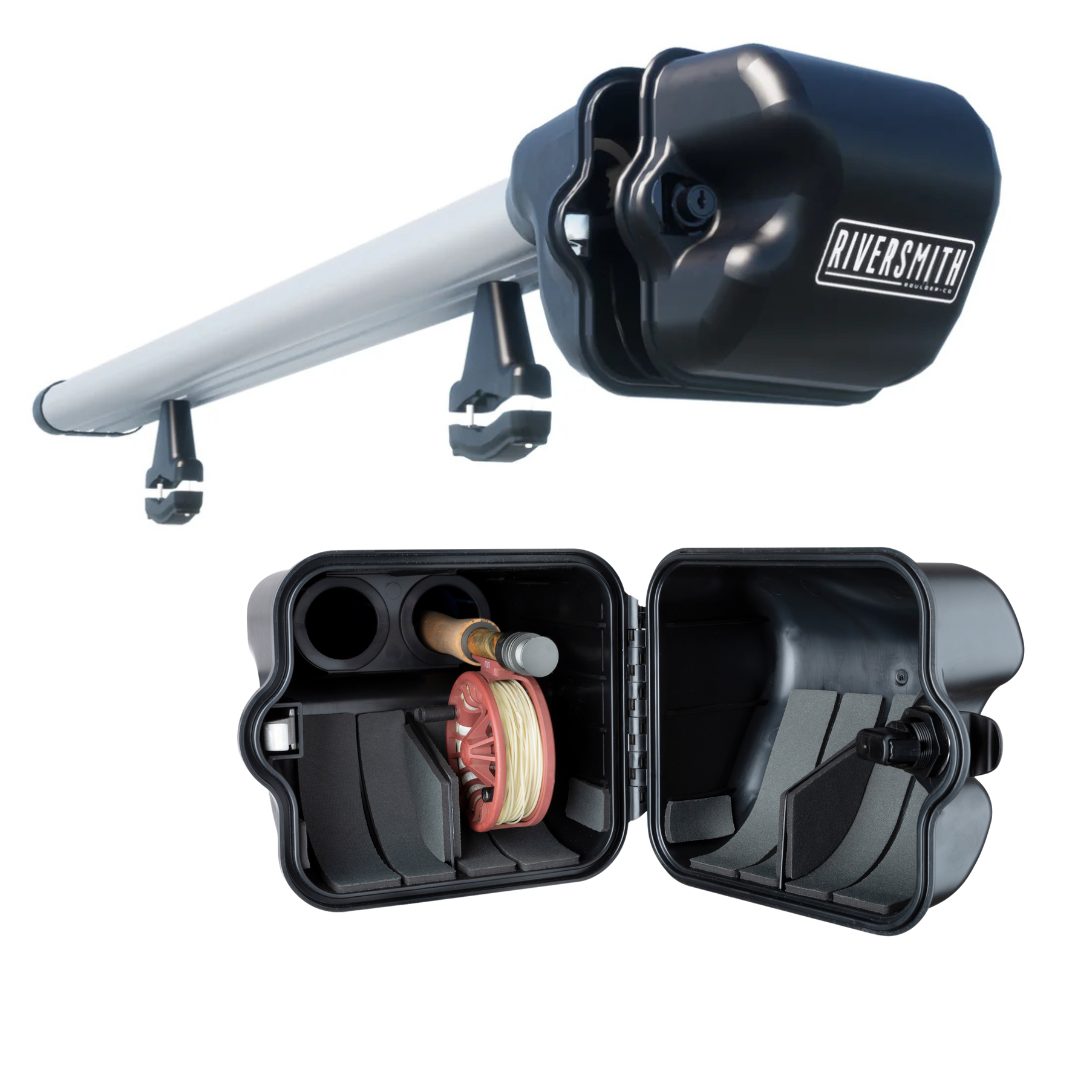
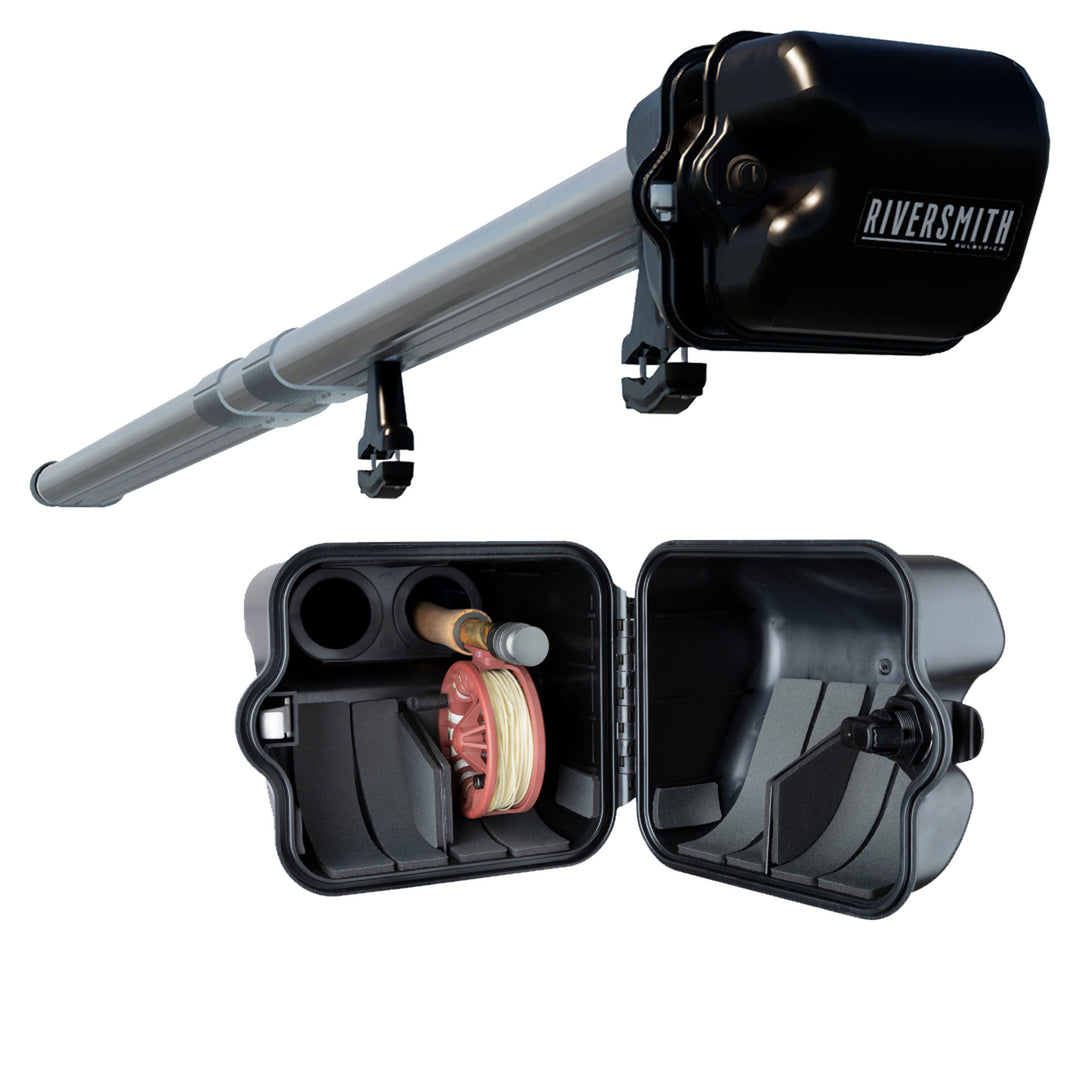
A telescoping rod carrier relies on nested segments held together by tension knobs, buttons, or friction sleeves. At speed, those clearances become a liability. Wind forces find the gaps, turning minor play into a persistent, high-frequency wobble.
A fixed system locks down and becomes a rigid extension of your vehicle. A telescoping tube flexes continuously. Over hundreds of miles of highway and washboard roads, that vibration causes material fatigue, loosens hardware, and compromises the whole rack.
Internal Clearance: The Bottleneck Problem
A telescoping tube requires one section to have a smaller diameter than the next. This creates an internal taper that restricts usable space inside the carrier.
The main section may have generous clearance. The nested sections get progressively tighter. Large saltwater guides, thick spey rods, or heavily padded rod socks won't fit into the collapsed sections. A feature meant to offer versatility does the opposite: it dictates what gear you can carry based on how far the rack is extended. A carrier should offer uniform clearance end to end.
Dust, Grit, and Friction
Fly fishing means dirt roads. Fine silt and dust hang in the air on the access roads worth driving.
Introduce a sliding mechanical system to an external roof rack and you invite debris into the tracks and overlapping seams. Once inside, that grit acts like sandpaper. Every time the unit is expanded or collapsed, debris scores the internal walls, damages the liner, and jams the sliding mechanism. A rigid carrier has no sliding components. A harsh environment never compromises its function.
The Convenience Myth
The main selling point of a collapsible carrier is portability. It doesn't hold up.
Collapsing the unit doesn't change its weight. A roof rack built to protect fly rods requires heavy-duty metals and engineered plastics. Making it shorter doesn't make it lighter. The idea of comfortably carrying it to a hotel room is a fantasy. It's still a heavy, awkward piece of hardware.
Collapsing it also doesn't simplify mounting or removal. You still deal with the same hardware, crossbar attachments, and alignment steps as any rigid system. Sliding components just add another variable while you're hoisting the assembly onto your roof.
The point of a roof rack is to arrive at the water rigged and ready. If you collapse the carrier between uses, you have to unclamp, extend, lock, and re-secure every section before loading a fly rod. The convenience evaporates the first time you're standing in a parking lot trying to fish.