What you need to know when traveling with fly rods and gear in Mexico
We have watched a lot of trips get complicated before anyone made a cast. A rod tube that did not show up on the carousel in Cancun. A gate agent in Yucatan who decided a case that flew as a carry-on two weeks earlier was now checked luggage. A checked bag not arriving in Baja. None of these ruined the fishing or the beauty of Mexico. All of them cost time, money, or both, and all of them were avoidable.
Mexico deserves better planning than most anglers give it. The flights are short, the guide networks are good, and the fishing covers everything from permit and bonefish on the Yucatan flats to roosterfish and dorado off the Baja beaches. The gear list for those trips is long and expensive. Two or three rods in the 8- to 12-weight range, sealed-drag reels, tropical lines, leader material, pliers, boots, and a few hundred dollars in flies is a normal kit. Moving that kit through two airports, a customs line, and a shuttle van is the part of the trip worth thinking through.
What Customs Actually Allows
Mexican customs lists fishing rods as personal luggage, and the guidance specifically allows four rods per traveler. Four rods covers almost any trip. A primary rod, a backup in the same weight, and something heavier or lighter fills out the allowance with room to spare.
Problems start when gear stops looking personal. Rods in retail packaging, duplicates of the same new reel, or a pile that no single person can explain reads as inventory. Used gear can look new to a customs officer. Keep a simple list of rod and reel models with serial numbers on your phone. You will probably never need it. It costs nothing to have.
Groups should skip the shared rod tube. One oversized tube holding six anglers’ rods creates confusion at check-in and customs even when the total count is legal. Every angler should be able to point to their own gear and account for it.
Theft Is the Bigger Risk
Anglers worry about broken rods. Missing gear ends more trips. The rod tube left visible in a rental car, the reel pouch that disappears from a dock, the sticker-covered case that tells the whole airport what is inside. A lost fly box or line wallet will sideline you as fast as a snapped blank, and there is no lodge loaner program for the exact tropical taper you built the trip around.
Reels, sunglasses, and cameras go in the personal bag. Gear stays consolidated, so a missing piece gets noticed at the hotel, not at the boat ramp the next morning. Nothing expensive stays visible in a vehicle.
The other risk is the roadside stop. Travelers in Mexico have reported police demanding cash for minor or invented infractions, and Canadian government travel guidance warns about it directly. Ask for a written citation and official payment instructions. Carry only the cash you need for the day. Know your route, skip night driving in unfamiliar areas, and use established lodges and transfer services. Expensive gear in an unfamiliar town makes you a more interesting stop. The fix is looking organized and being hard to rattle.
Airlines Do Not Follow Their Own Rules
TSA allows rods in carry-on and checked bags. Size limits belong to the airlines, and enforcement varies by agent, airport, and day. A four-piece rod case that boarded in Denver can get pulled at the gate in Cancun on the return. The outbound flight guarantees nothing about the trip home.
Check the airline policy on carry-on dimensions, rod cases, and sports equipment fees before booking. Some airlines count a rod case and tackle bag as one checked item. Some do not. Oversize and overweight charges at the counter are the most expensive version of that lesson.
Pliers, hook files, and larger flies with big hooks go in checked bags. Loose hooks in a carry-on get confiscated.
Pack Against Movement
A hard tube stops impact. It does not stop rod sections from rattling against each other for six hours, and that is how tips and guides break in transit. Sleeve and support the sections. Case the reels separately from lines and tools. Keep wet boots and sun gear isolated from clean clothes and electronics.
Strip the retail packaging before you fly. Label gear with your name and contact information. Keep the lodge confirmation, guide contact, and return flight details somewhere you can reach them in a customs line.
One Bag Instead of Four
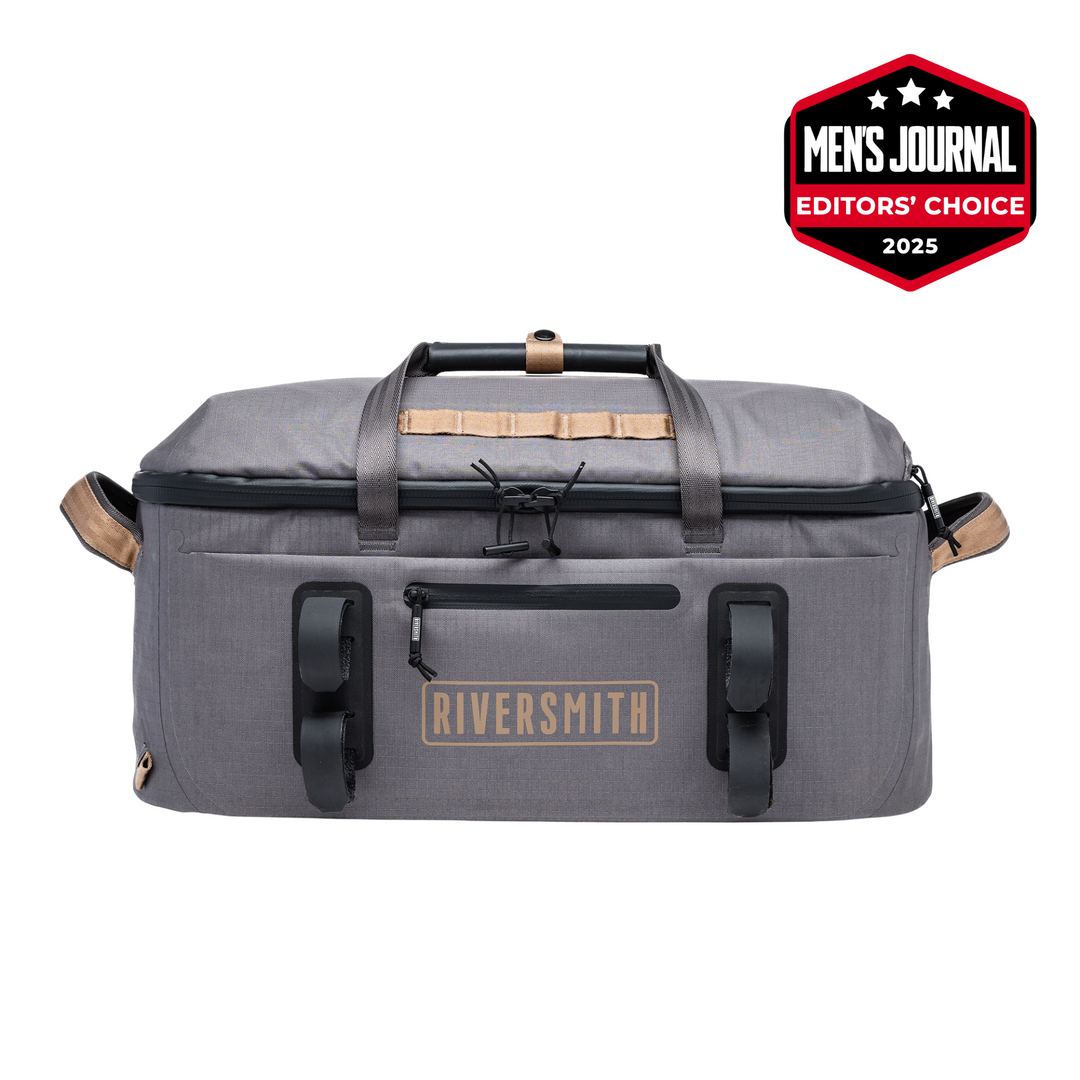
The setup that works is consolidation. The Riversmith Travel Pack carries rods, reels, clothing, and travel essentials in one system instead of a rod tube, reel case, duffel, and backpack traveling as separate pieces. Fewer pieces mean fewer things to lose, less to leave visible in a van, and a shorter conversation at customs. When a gate agent forces the check, the rod sections are protected in a bag built for the baggage system rather than wrapped in a rain jacket inside soft luggage.
The fishing in Mexico is worth the trip. Bring the rods you will fish, pack them so they cannot move, keep the kit in one place, and know the rules before the person at the counter tells you their version.
Learn more about the Riversmith Travel Pack at riversmith.com.